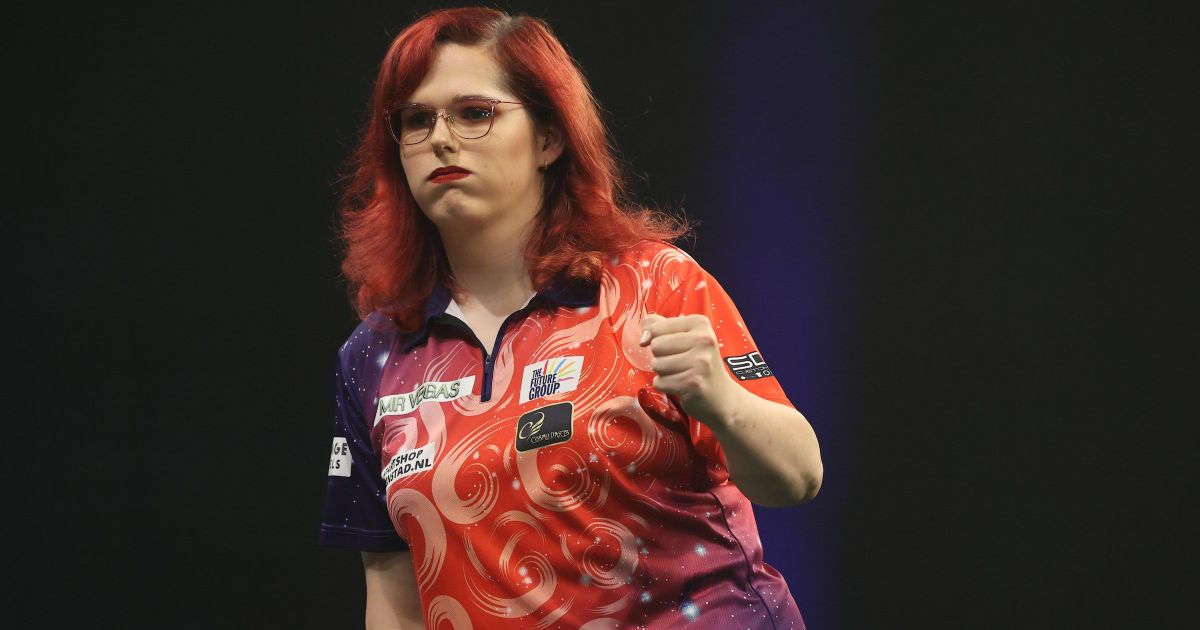
Noa-Lynn van Leuven: A Deep Dive into the Debate and Opinions
The world of darts, a sport celebrated for its precision, mental fortitude, and inclusive spirit, has recently found itself at the heart of a significant societal discussion. At its epicenter is Noa-Lynn van Leuven, a talented Dutch transgender darts player whose impressive rise in the sport has sparked a multifaceted debate. The "noa-lynn van leuven meinung" – the collective opinion and discourse surrounding her participation – encapsulates broader questions about fairness, inclusion, and the role of transgender athletes in women's sports. This article delves into her journey, the controversies, and the varying perspectives that shape this important conversation.
The Ascendant Career of Noa-Lynn van Leuven
Noa-Lynn van Leuven has not just stepped onto the darts scene; she has burst forth with remarkable talent and dedication. Her journey is marked by significant achievements that highlight her skill as an athlete. This year, she earned a coveted spot in two tournaments on the Darts Pro Tour in Hildesheim, a testament to her strong performances and consistent play. Beyond merely participating, she faced off against darting legend Gary Anderson, a two-time world champion. While the match resulted in a 0:6 defeat, the very act of competing at such a high level against one of the sport's icons was, for van Leuven, a monumental success and a significant step in her professional career.
Her achievements extend beyond individual matches. In a truly historic moment, also in Hildesheim, Noa-Lynn van Leuven became the first non-male participant to win a mixed-gender PDC (Professional Darts Corporation) tournament. This groundbreaking victory underscored her ability to compete and triumph against a diverse field of players, irrespective of gender, and showcased the immense talent she brings to the oche. These accomplishments establish her not just as a figure of controversy, but first and foremost as a formidable competitor within the sport.
At the Heart of the Debate: Fairness and Inclusion in Women's Sports
Despite her on-target throws and impressive wins, Noa-Lynn van Leuven has, at times, found herself unwillingly thrust into the media spotlight due to off-board controversies. The central point of contention, and the driving force behind much of the "noa-lynn van leuven meinung," revolves around the participation of transgender women in women's sports categories.
A notable incident occurred at the Denmark Open, a tournament organized by the World Darts Federation (WDF). Deta Hedman, a highly decorated English darts player with countless titles and three Women's World Championship final appearances, refused to compete against van Leuven in a quarter-final match. Hedman publicly articulated her stance, stating, "I don't think biological born men should compete in women's sports." This sentiment resonated with some others in the darts community; for instance, team colleagues Aileen de Graaf and Anca Zijlstra also withdrew from a national team in protest, expressing similar concerns about fairness.
Critics of transgender women's participation often argue that individuals who have gone through male puberty retain inherent biological advantages, such as greater bone density, muscle mass, and lung capacity, which even hormone therapy may not entirely negate. They also point to the absence of menstrual cycle-related challenges as a perceived advantage. These arguments underscore a fundamental concern for many female athletes: protecting the integrity of women's sports and ensuring a level playing field based on perceived biological equity. This perspective forms a significant part of the critical "noa-lynn van leuven meinung" that has been voiced in certain circles. For a deeper understanding of this aspect of the debate, you might find
noa-lynn van leuven meinung - Article 1 insightful.
Navigating Policy and Scientific Understanding: The WDF's Stance
In contrast to the critical voices, sports governing bodies like the WDF approach the issue through established policies and current scientific understanding. The WDF's regulations permit transgender women to participate in women's competitions provided they have undergone gender-affirming hormone therapy for at least one year and can provide medical confirmation.
The WDF’s stance is rooted in the belief that, based on current scientific evidence, there is no definitive proof that transgender women retain a significant, insurmountable advantage over cisgender female competitors after a period of hormone therapy. Their official statement emphasizes that "as long as there are no clearer studies on visual-spatial differences, the WDF will continue to allow transgender athletes to participate in WDF ranked tournaments for women in accordance with existing transgender policy." This highlights the challenge faced by sports organizations: balancing inclusion with fairness, often in the absence of universally accepted, conclusive scientific data on long-term athletic advantages post-transition.
The nature of darts as a "mental and precision sport" further complicates the debate. Unlike highly physical sports where strength and endurance are paramount, darts relies heavily on focus, hand-eye coordination, psychological resilience, and fine motor skills. While some biological differences could theoretically influence stability or muscle control, the direct impact of male puberty on dart-throwing ability in a post-transition athlete remains a subject of ongoing discussion and scientific inquiry. This unique characteristic of darts often leads to questions about whether the biological advantage arguments, typically applied to highly physical sports, are equally relevant here.
The Broader Implications and Future Outlook
The discussion surrounding Noa-Lynn van Leuven extends beyond her individual career, serving as a microcosm for a global conversation about transgender inclusion in sports. Her upcoming participation in the Darts World Championship is yet another milestone that will bring further attention to these complex issues. The "noa-lynn van leuven meinung" is not static; it is evolving as more athletes come forward, more research emerges, and policies are reviewed.
For sports organizations, the challenge lies in creating policies that are both inclusive and equitable, respecting the identity of transgender athletes while addressing the concerns of cisgender female athletes. This requires ongoing dialogue, a commitment to evidence-based decision-making, and a willingness to adapt policies as scientific understanding progresses.
Practical Advice for Navigating the Debate:
*
Focus on Performance: Encourage fans and media to primarily focus on the athletic performance and skill of all players.
*
Seek Understanding: Promote respectful dialogue and education about transgender identities and the scientific complexities involved in athletic performance.
*
Support Policy Development: Advocate for sports federations to base their rules on robust, peer-reviewed scientific research, balancing inclusion and fairness.
*
Emphasize Respect: Regardless of one's personal "noa-lynn van leuven meinung," maintaining respect for all athletes as individuals is paramount.
The story of Noa-Lynn van Leuven is a powerful reminder that sport, at its best, reflects and challenges societal norms. It forces us to confront difficult questions and strive for solutions that uphold the spirit of competition while fostering an environment of respect and inclusion for all. For additional perspectives on this unfolding story, consider reading
noa-lynn van leuven meinung - Article 3.
In conclusion, Noa-Lynn van Leuven is a skilled darts player who has earned her place through strong performances. The "noa-lynn van leuven meinung" surrounding her presence in women's darts highlights a complex and often emotionally charged debate about biological advantage, gender identity, and fairness in sport. While opinions vary widely, the overarching goal for the darts community and sports worldwide remains the same: to foster an environment where all athletes can compete fairly, with dignity, and where their achievements are celebrated on their own merit.